Cork vs Rubber Turntable Mats: Static and Resonance Compared
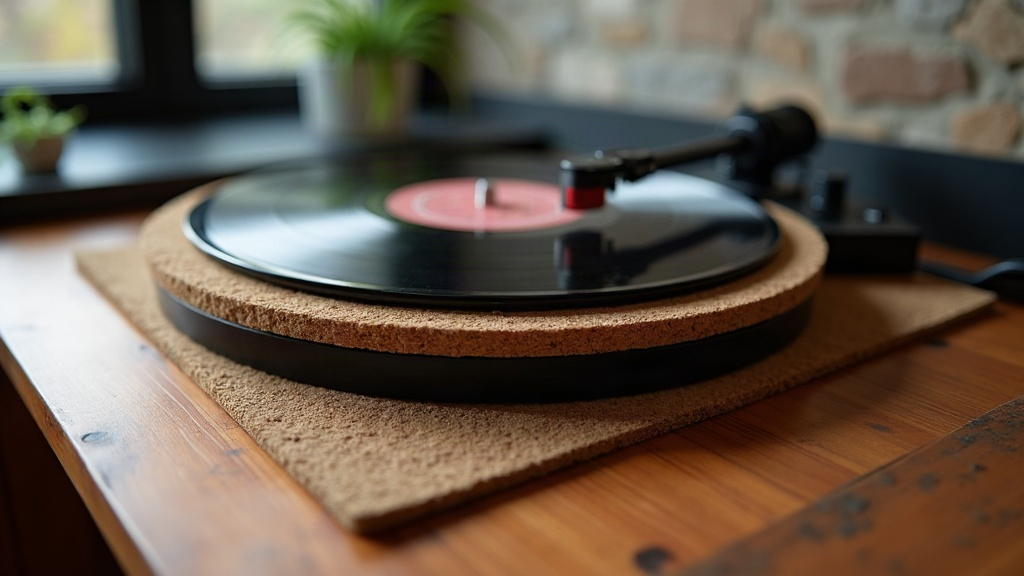
Choosing between a cork and a rubber turntable mat really comes down to two things most vinyl listeners obsess over: static buildup and resonance control. Short version? Cork mats tend to cut static better and give you a slightly brighter, more detailed sound. Rubber mats damp resonance more effectively and hand you a warmer, bass-heavier presentation. Neither wins outright. The right pick depends on your cartridge, how humid your room runs, and which tonal flavor you actually enjoy.
Why the Mat Material Matters
The platter mat sits right between your record and the turntable platter, doing more work than people give it credit for. It affects three things:
- Static electricity, meaning how much charge the record builds up during play, which pulls in dust and causes those annoying pops and crackles
- Resonance, the unwanted vibration energy passed between record, platter, and stylus
- Coupling, basically how snugly the record grips the platter, which shapes speed stability and bass tightness
Different materials behave differently here because of surface texture, density, and electrical properties. A porous, fibrous material acts nothing like a dense elastic one, even if both look similar from across the room.
Cork Mats: Strengths and Weaknesses
Cork is a natural, porous material that’s been used on turntables for decades. Audiophiles chasing clarity tend to gravitate toward it.
Pros:
- Lower static generation. Cork’s slightly textured surface and lower friction against vinyl generate noticeably less static than rubber. Live somewhere dry, or run a dehumidifier all winter? That alone might be the deciding factor against rubber.
- Neutral, open sound. Cork lets more treble detail through. People often describe it as airy, transparent, almost “see-through” in the high end.
- Lightweight and gentle on records. Minimal risk of residue transfer compared to some rubber compounds.
Cons:
- Less resonance damping. Cork is stiffer than rubber, so it doesn’t soak up micro-vibrations as well. On a resonance-prone table, that can mean slightly looser, less controlled bass.
- Wears faster. Years of a heavy platter pressing down on it and cork starts to compress, flatten, lose its bounce.
- Can sound thin on budget decks with weak isolation, since it’s doing less to mask mechanical noise from the motor or plinth.
Rubber Mats: Strengths and Weaknesses
Rubber (or rubber-cork hybrids) ships stock on a huge range of turntables, from entry-level Audio-Technica models to vintage Technics decks that are still spinning forty years later.
Pros:
- Excellent resonance absorption. Rubber’s elasticity soaks up vibration from the motor and plinth, which translates into tighter, punchier bass and a quieter noise floor overall.
- Firm record coupling. Records sit snugly in place, so slippage during fast cueing on a direct-drive table is much less likely.
- Durable. Rubber holds its shape and damping qualities for years, no flattening, no sagging.
Cons:
- Higher static buildup. Rubber is more prone to triboelectric charging, which means more dust clinging to the surface and occasional pops, especially once humidity drops below 40%.
- Can sound warmer but a bit duller. Some listeners notice rubber rolls off high-frequency detail compared to cork or acrylic.
- Residue risk with cheaper compounds, which can leave faint marks on labels over time.
Side-by-Side Comparison
| Factor | Cork Mat | Rubber Mat |
|---|---|---|
| Static buildup | Low | Higher |
| Resonance damping | Moderate | Strong |
| Sound character | Bright, detailed | Warm, bass-forward |
| Durability | Moderate (compresses) | High |
| Best for | Dry climates, bright-sounding cartridges | Noisy plinths, bass-light systems |
How to Decide Which One You Need
Ask yourself a few honest questions:
- Do you get frequent static pops, or see dust clinging to your records right after a play? Switch to cork, or an anti-static cork-rubber hybrid.
- Is your turntable’s plinth lightweight, or does it rumble under load? Rubber will tame that far better than cork.
- Does your cartridge already sound bright, maybe a touch sibilant on vocals? Pair it with rubber to smooth things out.
- Does your whole system sound dull, or too bass-heavy for your taste? Cork can open things back up.
A lot of experienced collectors just keep both on hand and swap depending on the pressing, or even the season. Cork in winter when static gets brutal, rubber the rest of the year for isolation-sensitive setups.
Other Options Worth Knowing
- Acrylic mats combine low static with solid resonance control, but they cost noticeably more, often two or three times the price of a basic rubber mat.
- Felt mats are ultra-thin and nearly static-neutral, though they offer almost no damping whatsoever.
- Leather mats split the difference: moderate static reduction paired with a smooth, musical tone.
Conclusion
Cork and rubber solve different problems, really. Cork cuts static and brightens things up; rubber damps resonance and deepens the bass. If static pops keep ruining your listening sessions, cork is the obvious upgrade. If your turntable sounds thin, or the bass just never seems to punch through, rubber is probably your answer. For a lot of listeners, the smarter move isn’t picking one mat forever. It’s understanding both well enough to match the mat to the record, the room, and the rig in front of you.