Mono Switch vs Stereo Cartridge for 1950s Jazz LPs
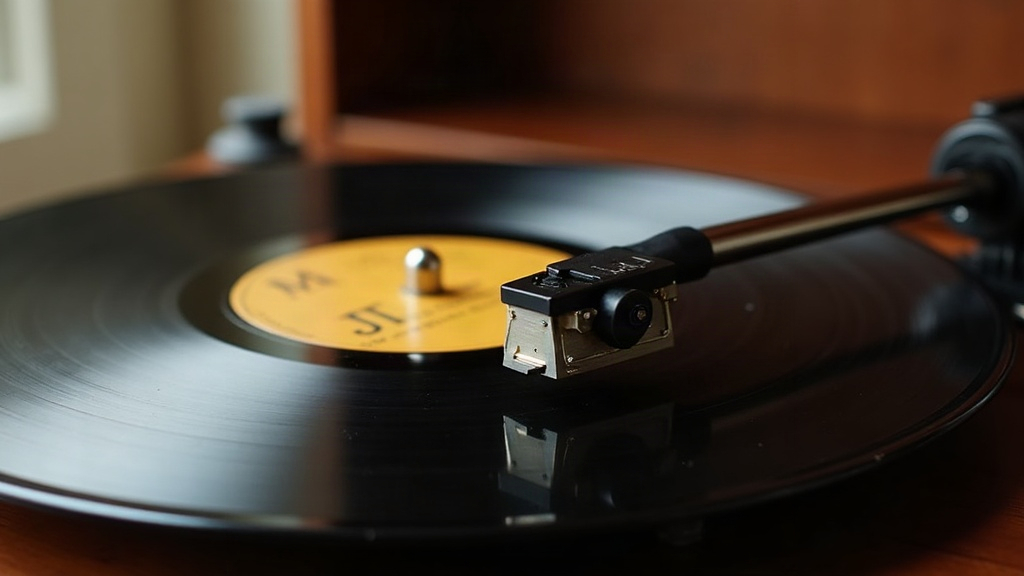
If you’re spinning original pressings of 1950s jazz, Blue Note, Prestige, early Riverside stuff, the argument over mono switch versus dedicated mono cartridge isn’t just audiophile hair-splitting. It changes what you actually hear: surface noise, imaging, how close you get to the record as it was cut back in the day. Short version: for true mono-era jazz LPs, a real mono cartridge (or at the very least, a mono switch summing your stereo signal) will nearly always sound cleaner and more honest than running a standard stereo cartridge over those grooves.
Why This Matters for 1950s Jazz Specifically
Almost every jazz LP cut before 1958 came from mono lacquer masters. The cutting head moved laterally only, side to side, nothing vertical. Stereo cutting heads showed up commercially around 1957-58, and those move both laterally and vertically to pack two channels into one groove.
Here’s why that distinction actually matters:
- Mono grooves have zero vertical modulation. Whatever vertical movement your stylus picks up on a mono pressing isn’t music. It’s pops, ticks, decades of wear.
- Stereo cartridges read both axes. Drop a stereo cartridge onto a mono LP and you’re pulling in vertical noise right alongside the lateral music signal. That’s where the extra hiss and crackle comes from.
- A true mono cartridge tracks laterally only, so it mechanically throws out vertical noise at the source, before it ever reaches your phono preamp.
Mono Switch vs. True Mono Cartridge: What’s the Difference?
Mono Switch (Electrical Summing)
A mono switch on your amp or preamp sums the left and right channels from a stereo cartridge into a single signal. What that gets you:
- Some reduction in out-of-phase noise, plus a more centered image
- Convenience. No cartridge swap, no fuss
- Vertical noise still gets picked up by the stereo stylus and bleeds into the mix anyway, because the cartridge hasn’t changed, only the electronics downstream have
True Mono Cartridge (Mechanical Solution)
A dedicated mono cartridge has a suspension built to move side-to-side only. What you get:
- Genuinely quieter surfaces on well-worn originals, not just a cleaner-sounding mix
- A more natural tonal balance, no phase cancellation weirdness
- Usually paired with a wider stylus (a 1.0 mil conical is typical) that sits lower in the groove, skipping past the worn or chewed-up upper walls where a narrower stereo stylus (0.6-0.7 mil) tends to dig right in
Which Should You Choose?
Go with a true mono cartridge if:
- You’re regularly buying original 1950s and early ’60s mono jazz pressings
- Your copies show visible wear, or spent years getting tracked by old stereo gear
- You want to hear these records close to how the engineers actually monitored them at the cutting session
A mono switch is fine if:
- Mono jazz LPs are an occasional thing for you, not a daily habit
- You’ve already got a good stereo cartridge and don’t feel like buying a second one
- Budget or simplicity beats chasing the last 10% of fidelity
Practical Setup Tips
- Look at your stylus profile. Conical or spherical tips (standard on most mono cartridges) ride mono groove wear better than a fine elliptical tip does.
- If you’re relying on a switch, make sure it’s a genuine summing mono switch, not a “mono button” that just routes one channel and throws away the other. You lose information that way.
- Split your time between mono and stereo collections? A dual-output headshell, or even a second tonearm, solves the swapping headache. Plenty of serious collectors run two arms for this exact reason.
- Check whether your reissue is a true mono cut or a “fold-down” stereo-to-mono. The fold-down won’t gain much from a mono cartridge since it was never cut as a genuine lateral-only groove in the first place.
Conclusion
For serious listening on 1950s jazz originals, a true mono cartridge is a real, audible step up from a stereo cartridge with a mono switch: quieter surfaces, more accurate tone, and gentler handling of vintage grooves that have already survived seventy-plus years of stylus traffic. Still, a mono switch is a perfectly smart, cheap compromise if a second cartridge isn’t in the cards right now. Either path gets you to the same place: hearing these sessions the way the engineers who cut them actually meant for them to sound, with your gear finally respecting how mono grooves were made in the first place.